
CORPORATE COUNCIL
We deeply appreciate the commitment of our Corporate Council partners, whose generous support helps us expand our mission programs and reach more people affected by hydrocephalus.
Our Research Investments are Working
We saw the success of our research investment strategy.
Dr. Shenandoah Robinson, a researcher and professor of neurosurgery at Johns Hopkins University School of Medicine, and Dr. Lauren Jantzie, from the University of New Mexico School of Medicine, were recommended for funding through the Department of Defense Congressionally Directed Medical Research Program (CDMRP) to study acquired hydrocephalus in the mature brain, with a particular focus on post-traumatic hydrocephalus.
At her lab at Johns Hopkins, Dr. Robinson examines how the injury to the developing brain leads to deficits, such as cerebral palsy and epilepsy, and what can be done to repair the damage. She began focusing more of her research efforts on hydrocephalus in 2016 after receiving an Innovator Award from the Hydrocephalus Association. The study focused on ways in which early damage from intraventricular hemorrhage (IVH) can cause posthemorrhagic hydrocephalus of prematurity. In the study, Drs. Robinson and Jantzie examined how damage to the cells lining the ventricles contributes to the development of hydrocephalus and whether the use of clinically available drugs can enhance natural repair processes in hopes of reversing this damage.
Without the initial grant funding they received from the Hydrocephalus Association, these scientists would not have set their focus on hydrocephalus or competed for the DoD grant.
Clinical Research Networks Expanded
The Adult Hydrocephalus Clinical Research Network (AHCRN), a network of eight hospitals focused on adult hydrocephalus patients, added three sites, including our first European site.
Published Our Translation to Transform White Paper
Following our Translation to Transform (T2T) workshop in 2016, which brought together patients and clinical researchers, a white paper was published in 2017 highlighting the findings from the workshop. The white paper outlined patient and caregiver concerns, insights and recommendations for conducting hydrocephalus clinical research. It also provided insight into how investigators can engage with hydrocephalus patients on future studies.
8 GRANTS
awarded to scientists conducting
hydrocephalus research
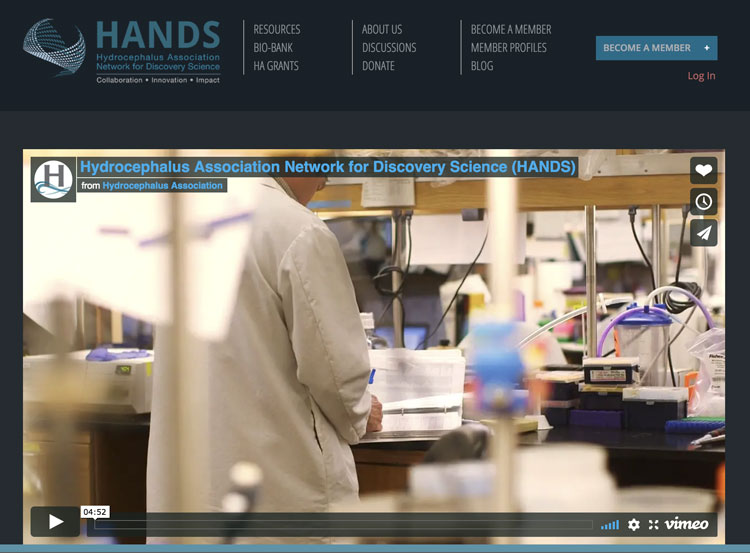
HANDS Membership Doubled in Size
The Hydrocephalus Association Network for Discovery Science (HANDS), which is a platform for both communication and collaboration among hydrocephalus basic and translational researchers, added 75 new members bringing total membership to 150.
HANDS is not only a place to meet and collaborate, it’s also a centralized resource. Databases for research models, therapeutics, biomarkers, and standardized protocols, as well as infrastructure that supports the entire research community, are being developed.
Launched Our Roadmap to a Cure Campaign
We know that to prevent or even cure hydrocephalus, we need millions more allocated to hydrocephalus research. The Roadmap to a Cure campaign is our commitment to investing $20 million by 2020 to accelerate hydrocephalus research, expand patient support services and raise public awareness about hydrocephalus.
Given the immense health and financial burdens hydrocephalus places on individuals and society, far too little is invested in research. The U.S. invests $8 million in hydrocephalus research, compared to $89 million for cystic fibrosis and $161 million for Parkinson's. To change that, we must increase funding for hydrocephalus research at the NIH and other federal agencies, and expand our outreach efforts to all federal agencies that provide funding research and patient support. The campaign lays out an aggressive plan focused on expanding research and advocacy, patient support and education, and public awareness, but we can’t do it without the support of everyone in the hydrocephalus community. With the public’s help, we are confident that we can change the future of hydrocephalus.

2
early-stage drug therapies supported
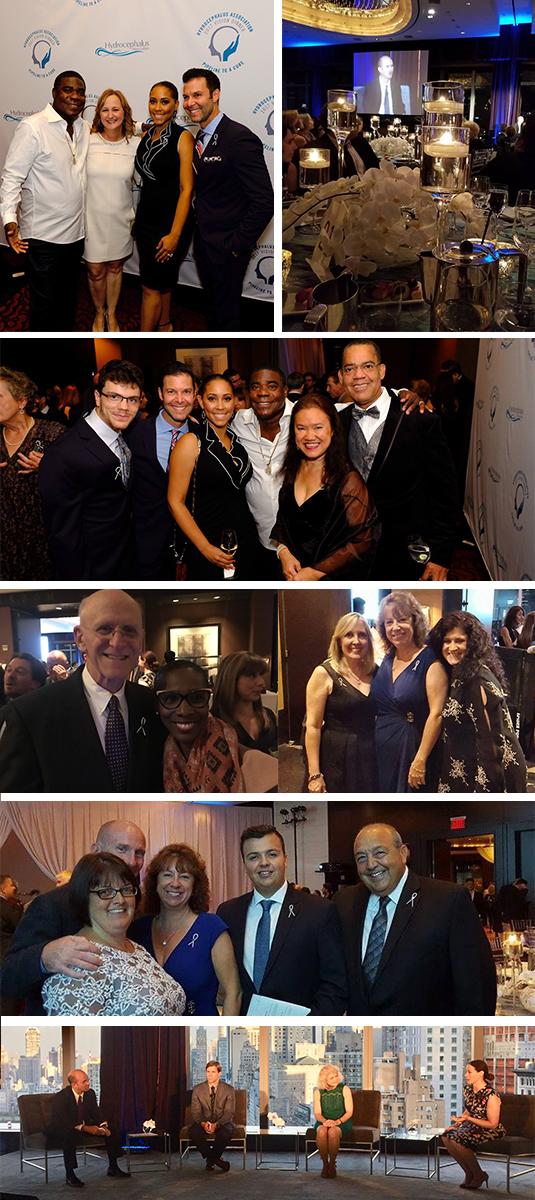

2017 Vision Dinner Helped Accelerate Hydrocephalus Research
Thanks to our 2017 Vision Dinner, we are now much closer to our goal of raising $3M for research focused on Post Hemorrhagic Hydrocephalus (PHH), which develops as the result of a brain bleed. The evening brought together philanthropists, business leaders, scientists, patient advocates, and doctors for an educational and inspirational program highlighting the innovative research that will lead to the prevention of the development of PHH, the leading cause of brain surgery in children.
“Listening to the scientists this evening share the advances in the lab toward preventing the development of hydrocephalus after a brain bleed or mitigating the injury caused to the brain is inspirational,” stated Vicki Brown, host of the annual Vision Dinner, now in its fifth year, and a mother to a son living with hydrocephalus. “It affirms that we have the capacity to solve this form of hydrocephalus for these children and families.”
The program included an interactive panel of three scientists who shared the state of their current research studies. Dr. Kristopher T. Kahle of the Yale School of Medicine is evaluating how a brain bleed impacts fluid production in the brain, causing the development of PHH. His goal is to identify a new therapeutic target to prevent the development of the condition. Dr. Shenandoah Robinson of Johns Hopkins University is determining if clinically available drugs can enhance the natural repair processes of the brain after a bleed in the hopes of reversing the damage. Dr. Jennifer Strahle of Washington University and St. Louis Children’s Hospital is investigating how blood is cleared from the brain after a bleed, in the hopes of identifying targeted therapies to assist that process and stop the development of hydrocephalus. Complementing the science shared during the evening, Aseem Chandra, Chair of the Hydrocephalus Association Board of Directors, and Melissa Kopolow McCall, the Vision Dinner Inspirational Award recipient, shared their personal stories as parents of infants impacted by the condition.
The evening was underwritten by Craig and Vicki Brown, generous benefactors to the Hydrocephalus Association, to ensure every dollar donated is allocated to advance hydrocephalus research. “Our vision is a world without hydrocephalus. By early investment in the most promising research, we are helping to make this a reality,” said Craig Brown, Senior Vice Chair of the Hydrocephalus Association Board of Directors.
To Learn More Visit: https://www.hydroassoc.org/vision-dinner-2018/.